

Illustrative image
THE TRUE KSA · BUSINESS SECTORS
Build the next chapter of Saudi mobility
Explore vehicle production, local supply chains, charging, fleets and aftersales—and the approvals, partners and economics that turn an automotive idea into a qualified Saudi business.
Research reviewed 23 October 2026
One market, several distinct businesses
Saudi mobility spans established imported-vehicle sales and truck assembly, emerging passenger-car production, supplier localisation and the services that keep vehicles moving. Choose a defined customer and operating model before choosing incentives.
Manufacturing is not distribution
Separate OEM production, component manufacturing, brand distribution, independent importing, fleet operation, charging and workshop services. Each has different activity conditions, approvals, capital needs and liability. A showroom does not establish local manufacturing, and a product reveal is not regular production.
Company plans and targets remain labelled. Trade values are gross HS 87 flows, not retail sales. Supplier opportunity assessments are editorial analysis. Source links and dates must remain visible.
Research reviewed 23 October 2026
Indicators with dates and scope
Selected published baselines and targets, reviewed 23 October 2026. These measures are not additive and are not a live sales dashboard.
- reported tradePeriod: 2025
$28.596bn
HS 87 gross imports
Vehicles and many parts, excluding rail, using the WITS/Comtrade statistical chapter. Not unit sales.
Source:A21 - reported tradePeriod: 2025
$2.665bn
HS 87 gross exports
Gross exports may include re-exports; not a count of Saudi-built vehicles.
Source:A22 - reported productionPeriod: 2025
10,300
IMSAC production
Company-reported Dammam commercial-vehicle production, not a national OEM total.
Source:A08 - targetPeriod: May 2025 announcement
50,000 / year
HMMME capacity target
Announced plant target; first vehicle was targeted Q4 2026. Actual start is not confirmed here.
Source:A07 - targetPeriod: 2034 target
45%
CEER local-content target
Company target by 2034; not an achieved national localisation rate.
Source:A15 - plannedPeriod: 8 October 2026 update
Q1 2027
CEER regular-production plan
October 2026 update opened reservations and set a planned regular-production period.
Source:A03 - company-reportedPeriod: September 2026
2,300
CEER reported workforce
Company-reported headcount in September 2026; not new sector jobs or all-Saudi employment.
Source:A14 - tax frameworkPeriod: Current framework
15%
Standard VAT
Where applicable; do not confuse with a combined customs-and-VAT rate.
Source:A26
Six routes into automotive & mobility
Open a route to see the business model, buyer qualification, approvals and investment questions. These are editorial opportunity assessments, not advertised tenders or guaranteed orders.
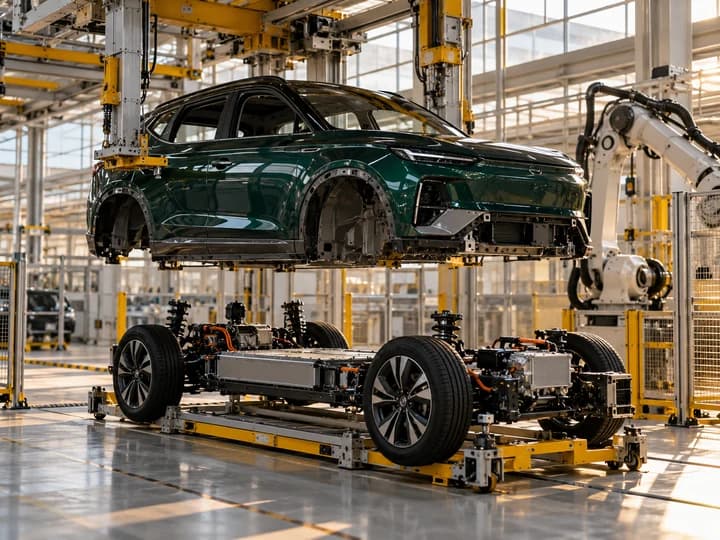 Illustrative image
Vehicle production & assembly
Serve local OEM programmes through qualified production, assembly support, tooling and plant services. Start with nominated demand and a realistic ramp-up plan.
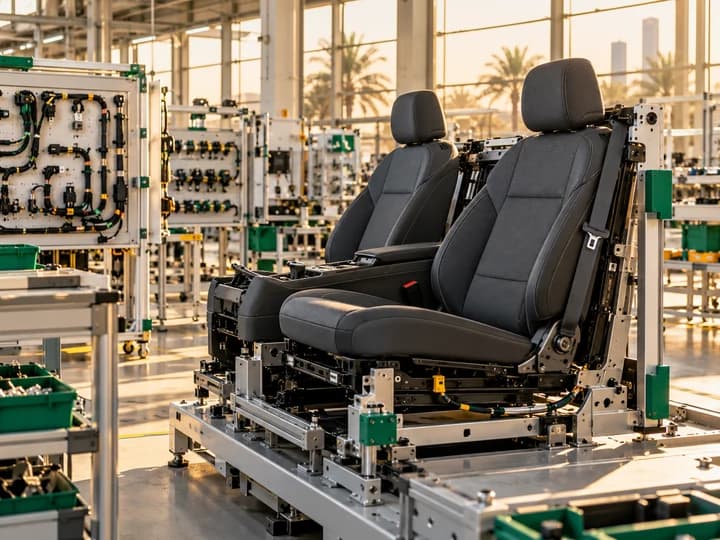 Illustrative image
Components & supplier localisation
Explore seats, wiring, mouldings, metal structures, thermal systems and specialist materials. Qualification and repeatable delivery matter more than a headline factory announcement.
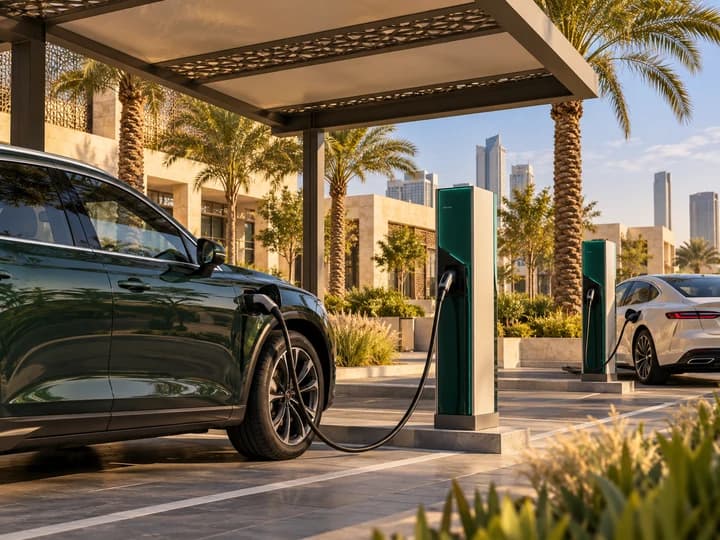 Illustrative image
Charging & energy services
Develop site, equipment, installation, operations and maintenance propositions backed by grid feasibility and realistic charger utilisation.
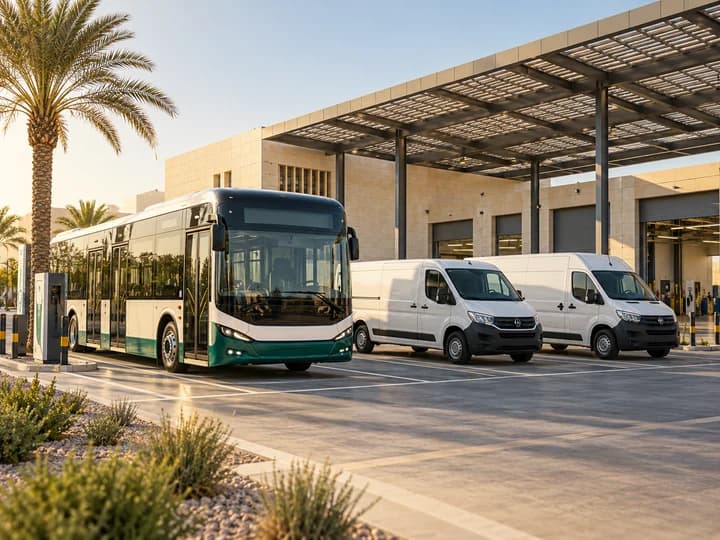 Illustrative image
Commercial vehicles & fleet mobility
Serve buses, delivery vehicles, rental and business fleets with vehicles, maintenance, charging and telematics tailored to duty cycle and total cost.
 Illustrative image
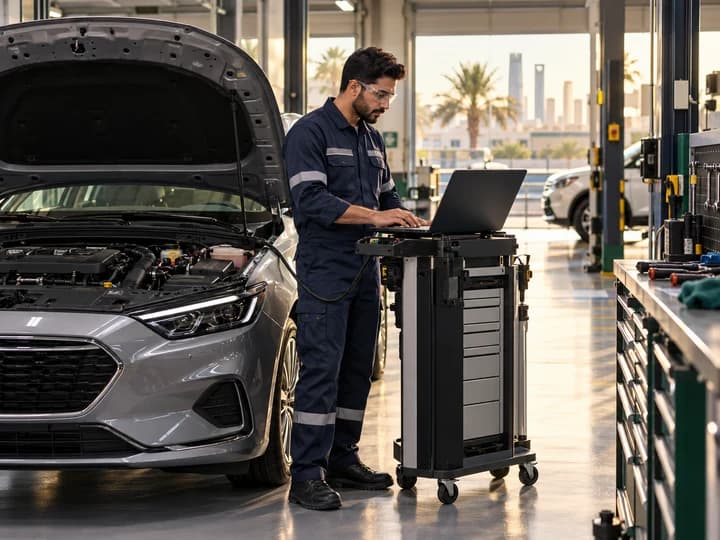
Aftersales, diagnostics & remanufacturing
Build dependable service, repair, spare-parts and technical-training offers, including safe EV competence, genuine traceability and warranty discipline.
 Illustrative image
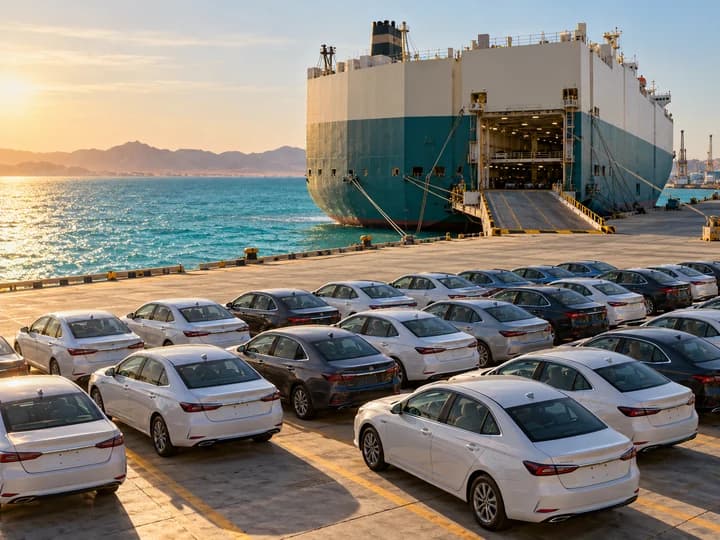
Vehicle trade & automotive logistics
Connect importers and OEMs with finished-vehicle transport, parts logistics, port handling, pre-delivery inspection and compliant clearance.
OEMs, suppliers and market participants
A curated directory grouped by actual role, not market-share ranking. Verify current ownership, commissioning and partner availability before transactions.
Status labels show what the cited source supports. They are not rankings, endorsements or partnership offers.
Showing 18 of 18
Manufacturers & assemblers
Lucid / AMP-2
Existing SKD assembly at KAEC; larger manufacturing expansion in industrialisation. Use later filings for status rather than recycling the April 2026 completion target.
Manufacturers & assemblers
CEER / EXOBOT
Saudi OEM backed by PIF and Foxconn. September reveal and October reservations are confirmed milestones; October release plans regular production in Q1 2027.
Manufacturers & assemblers
Hyundai / PIF HMMME
KAEC manufacturing JV; 70% PIF and 30% Hyundai per May 2025 announcement. Announced target includes ICE and EV vehicles; commissioning not confirmed in this pack.
Manufacturers & assemblers
Isuzu Motors Saudi Arabia
Established Dammam commercial-vehicle assembly and distribution. Company reports 10,300 production units in 2025 and 12,000 annual capacity.
Manufacturers & assemblers
AVI / Zahid commercial-vehicle ecosystem
Local truck assembly associated with Volvo, Renault and UD brands. Use current company pages for scope; do not imply those passenger-car brands all manufacture locally.
Manufacturers & assemblers
Juffali / NAI / JCV
Established commercial-vehicle assembly and services, including documented local FUSO Canter assembly. The cited Daimler partnership evidence is historical.
Suppliers & technology partners
MENA Tyre / PIF–Pirelli
Announced tyre-manufacturing JV. A 2026 SABIC materials agreement supports the supply-chain case but does not establish factory start-up.
Distribution & aftersales
Toyota / Abdul Latif Jameel Motors
Established Saudi authorised distribution and aftersales ecosystem. Do not present this as a Saudi Toyota passenger-car plant.
Distribution & aftersales
BYD / Al-Futtaim Saudi
Saudi new-energy vehicle distribution and retail presence. Distribution is distinct from domestic OEM manufacturing.
Charging & energy
EVIQ
Charging-network developer and operator; potential counterpart for infrastructure services and site discussions, subject to procurement requirements.
Charging & energy
ABB
Documented charger-technology deployment with EVIQ. A technology-supply relationship is not automatically an equity JV or local charger factory.
Suppliers & technology partners
Foxconn
CEER JV and vehicle-technology partner; distinguish OEM ownership role from individual component supply contracts.
Suppliers & technology partners
BMW / Hyundai Transys / Rimac
Named CEER technical partners; the company release does not by itself prove a separate commissioned Saudi factory for each partner.
Suppliers & technology partners
Lear / Benteler / Shin Young and other suppliers
Named supplier ecosystem around CEER. Verify each specific plant, nomination, investment stage and purchasing route before presenting an opportunity as open.
Distribution & aftersales
Nissan Saudi Arabia
Established Saudi market, dealer and aftersales presence. Use the official country/dealer directory to confirm the relevant regional distributor. This entry is market participation, not evidence of a Saudi passenger-car factory.
Distribution & aftersales
Chevrolet / GM market network
Established Saudi market, dealer and aftersales presence. Use the official country/dealer directory to confirm the relevant regional distributor. This entry is market participation, not evidence of a Saudi passenger-car factory.
Distribution & aftersales
Ford Saudi market network
Established Saudi market, dealer and aftersales presence. Use the official country/dealer directory to confirm the relevant regional distributor. This entry is market participation, not evidence of a Saudi passenger-car factory.
Distribution & aftersales
Kia Saudi market network
Established Saudi market, dealer and aftersales presence. Use the official country/dealer directory to confirm the relevant regional distributor. This entry is market participation, not evidence of a Saudi passenger-car factory.
| Partner (as reported) | Imports (USD) | Calculated share |
|---|---|---|
| Japan | 7.07 bn | 24.73% |
| China | 6.98 bn | 24.40% |
| United States | 2.59 bn | 9.06% |
| India | 1.86 bn | 6.51% |
| Germany | 1.83 bn | 6.41% |
| All partners, HS 87 gross imports | 28.596 bn | 2025 |
HS 87 gross imports; origin/partner as reported by WITS
Source values in USD thousands converted to USD. Shares calculated from displayed total; rounding applies.
Source:A21HS 87 gross exports, 2025
$2.665bn
Gross exports may include re-exports; not a count of Saudi-built vehicles.
Read trade values without inflating the market
WITS/Comtrade reports 2025 HS 87 imports of USD 28.596 bn and gross exports of USD 2.665 bn. Values are merchandise flows, not retail turnover, installed local capacity or unit sales. Gross exports should not be relabelled as Saudi-origin automotive output.
GCC–Singapore
An in-force FTA framework. Assess the applicable vehicle or component schedule and qualifying origin; shipping a third-country car through Singapore does not make it Singapore-origin.
Source:A33GCC–EFTA
In-force agreement with Iceland, Liechtenstein, Norway and Switzerland. EFTA is not the EU; do not apply it automatically to German or other EU-built cars.
Source:A32Build an origin evidence file
Keep bills of material, production records, supplier declarations, value-add calculations and the agreement-specific certificate or declaration. Request an advance ruling if classification or preferential origin is uncertain. The linked advance-ruling service lists Authorized Economic Operators as its audience; confirm the available applicant route with ZATCA or a qualified customs adviser.
Source:A29
Tax, customs and landed-cost structure
Finished cars, commercial vehicles, parts and production equipment should not share one assumed tariff. Build the calculation using the actual Saudi code, origin and importer status.
Light-vehicle customs
ZATCA’s light-vehicle estimator shows 5% of vehicle value, subject to the actual classification and assessment. Do not extend that rate to all parts, batteries, tyres, trucks or factory inputs.
Import VAT
Standard 15% where applicable. ZATCA’s vehicle estimator includes vehicle value, customs, relevant additional import charges and customs service fees in its VAT base. VAT is not normally just 15% of the invoice without considering the import base.
Age and efficiency charges
A restricted personal-import route exists for certain Saudi individuals and Premium Residency holders importing nonconforming used light vehicles, with substantial additional charges. This is not a general commercial exception or a way to import prohibited damaged vehicles.
Corporate income tax and Zakat
General income-tax rules include 20% on the relevant foreign share of taxable income, with ownership and special regimes affecting treatment. Zakat, withholding tax, treaties and transfer pricing require separate assessment. This is not 20% of revenue.
Trading and aftersales VAT
Assess sales, parts and service VAT, input-tax recovery restrictions, invoicing and records. Eligible used-vehicle profit-margin arrangements have separate conditions; do not use them as an automatic import VAT exemption.
Source:A26Costs beyond duty and VAT
Budget freight, marine insurance, terminal handling, delivery order, broker, inspection, conformity, storage/demurrage, inland delivery, PDI and registration. Confirm written quotations and avoid double-counting amounts already in the customs value.
Illustrative light-vehicle example, not a binding customs quote
- Assessed customs value
- 100,000 SAR
- Customs duty(5%)
- 5,000 SAR
- VAT base (value + duty)
- 105,000 SAR
- Import VAT(15%)
- 15,750 SAR
- Total with duty and VAT
- 120,750 SAR
Combined duty and VAT in this limited example are 20.75% of the assumed customs value, not 20%.
Assessed customs value SAR 100,000; duty 5%; VAT 15%; no other charges or exemptions. Actual assessment may differ.
Freight, insurance, port, inspection, broker and other local charges are excluded from this example.
Government support and practical facilitation
Support can reduce barriers when the project meets the relevant programme. There is no automatic blanket customs waiver, free land, universal EV tax holiday or guaranteed government order for every automotive business.
King Salman Automotive Cluster
KAEC cluster development brings OEMs and suppliers into a connected industrial location. Evaluate supply-chain proximity, port access and shared services; a cluster announcement is not a reserved plot or purchase contract.
Standard Incentives
Qualified priority industrial projects may receive support up to 35% of eligible initial investment, capped at SAR 50 m. Confirm current product eligibility, application timing, milestones and approval; a dealer or fleet buyer is not automatically eligible.
Source:A39SIDF finance and upgrading
Project financing and Tanafusiya can support eligible production and efficiency investments after appraisal. Distinguish debt financing from grants and fund working capital and owner equity realistically.
KAEC Special Economic Zone
ECZA promotional material describes 5% corporate income tax for up to 20 years for eligible zone investment. Admission, activity, boundaries and implementing rules determine treatment. Obtain project-specific confirmation; benefits do not automatically apply throughout KAEC or to mainland sales.
Approved industrial customs exemptions
Check machinery, spare-parts or input exemption decisions tied to industrial activity and approved goods/quantities. Separate customs treatment from VAT and from imports of vehicles for ordinary resale.
Source:A30Local-content and localisation agreements
CEER’s 2026 LCGPA agreements illustrate a documented localisation mechanism. They are company/product-specific, not a universal purchase guarantee. Check applicable procurement lists, qualification and local-content evidence.
Source:A16Digital investor and import services
MISA registration and official e-services support entry, with activity-dependent ownership conditions. ZATCA’s optional personal-import self-service can simplify an individual case but is not the commercial dealer route.
Specialist skills development
NAVA and OEM training partnerships provide practical routes to automotive skills. Confirm the current programme, employer commitments and eligibility rather than assuming a subsidy for every hire.
Export development and credit protection
Saudi Exports supports eligible export-development costs, while Saudi EXIM provides qualifying credit-insurance solutions. Confirm exporter eligibility, buyer coverage, limits and approvals; support is not guaranteed revenue or automatic nonpayment cover.
Choose your entry route and sequence approvals
Manufacturing, distribution, agency, charging and fleet operations should be mapped separately. Use the exact activity and site to establish your requirements.
- 1
Prove customer demand
Define vehicle/component/service, buyers, volumes, procurement route, competitive pricing and gross margin. Label non-binding interest and planned volumes honestly.
- 2
Register the investment and legal activity
Foreign-investor registration and entity formation depend on the exact activity. Confirm distribution/agency conditions rather than applying manufacturing ownership rules to all automotive activities.
Source:A35 - 3
- 4
- 5
- 6
- 7
- 8
Conformity, safety and responsibilities
Build one compliance matrix for each vehicle, part, charger and service. Government approval, OEM qualification and voluntary quality certification are different obligations.
Vehicles and import eligibility
Verify model age, fuel/energy efficiency, condition, VIN consistency and importer category using ZATCA and SASO. Prohibited salvage or damaged vehicles cannot be assumed admissible by paying an additional fee. Personal quotas and exceptions do not define commercial-dealer permissions.
Source:A23EV technical file
SASO’s service calls for applicable technical/test evidence, battery documentation, conformity declaration, operating information and risk assessment. Confirm latest requirements for local manufacture and imports before marketing.
Source:A43Energy efficiency and supply plans
Use the current Saudi CAFE framework, amendments and manufacturer-specific supply-plan requirements. Verify current SASO status before booking vehicle imports; do not reproduce an old manufacturer suspension list as current.
Source:A46OEM supplier quality
Ask the purchasing OEM for its current quality manual, customer-specific requirements, sample/production approvals and audit plan. IATF 16949, ISO 9001 and process approvals apply according to scope and buyer conditions; they are not interchangeable permits.
Source:A47Battery transport, repair and end of life
Treat vehicle transport, loose batteries and damaged/defective batteries as different cargo and safety cases. Obtain the current carrier and dangerous-goods requirements, competent isolation procedures and approved waste arrangements; no universal state-of-charge threshold is promised here.
Consumer service and data
Define warranty, spare-parts availability, recall escalation, service records and complaint handling. Connected vehicles and mobility apps require a separate assessment of privacy, cybersecurity, consent and cross-border data arrangements.
Shipping lines, agents and automotive logistics
These are capability and contact-directory examples, not freight quotes or confirmation of a current sailing. Verify port coverage, local agent appointment, importer/broker roles, EV acceptance and written terms.
Carriers, shipping agents, forwarders, licensed customs brokers, importers and inland transporters have different responsibilities. GAC shipping is not GAC Motor.
Bahri Integrated Logistics
RoRo, breakbulk and integrated logistics capabilities. Confirm the actual service for finished vehicles, kits or equipment and who performs clearance.
Höegh Autoliners
Finished-vehicle/RoRo carrier with Saudi location information. Confirm current agent, receiving port, sailing and EV/damaged-battery cargo rules.
Wallenius Wilhelmsen
Vehicle ocean transport and logistics network; use the official agent directory and obtain a shipment-specific offer.
MSC Saudi
Saudi automotive shipping proposition for vehicles and components; compare container/vehicle handling and inland scope.
Maersk / Saudi local agents
Container and supply-chain services; official Saudi directory identifies Mercantile Shipping Agencies Limited as a local agent. Confirm the contracted service and cargo eligibility.
GAC Saudi Arabia shipping/logistics
Ship agency and logistics services; separate shipping-agency, forwarding and customs-broker responsibilities. This is not GAC Motor.
Arabian Logistic Solutions Services
Automotive logistics company describing an Almajdouie–CEVA JV; explore storage, vehicle handling and delivery scope directly.
What to put in the shipping RFQ
Origin/destination, VIN list and dimensions, new/used status, propulsion, battery condition, driving condition, value, Incoterm, importer, conformity status, insurance, required dates, storage allowance and itemised port/inland charges. Require an explicit allocation of damage and delay liability.
Authorities, industry bodies and institutes
Select the authority for the decision required. Regulators, industrial investors, training providers and associations serve different roles.
Investment, industry and zones
Register, license, locate and finance the project.
MISA / Invest Saudi
Investor registration, activity eligibility and investment support.
Ministry of Industry and Mineral Resources
Industrial licence stages and manufacturing investor services.
ECZA / KAEC SEZ
Zone admission, jurisdiction and industrial location options.
PIF / automotive cluster ecosystem
Industrial investments and private-sector supplier engagement.
Saudi Industrial Development Fund
Eligible project finance and industrial upgrading.
Regulators and trade compliance
Product conformity, customs, trade rules, transport and premises.
SASO
Vehicle/charger conformity and technical/efficiency requirements.
ZATCA
Customs, valuation, taxes and vehicle import controls.
General Authority for Foreign Trade
Agreements, market access and trade-remedy information.
Transport General Authority
Activity-specific transport, rental and e-hailing regulation.
Municipal authorities / MoMAH
Premises and relevant charging-site technical requirements.
Local Content and Government Procurement Authority
Local-content mechanisms and product-specific procurement eligibility.
Skills, quality and industry bodies
Training, quality systems and industry networks. Not licensing regulators.
National Automotive and Vehicles Academy
Applied automotive and EV technical training.
Electric Vehicle Technologies Association
Knowledge, partnerships and ecosystem development; not a licensing regulator.
International Automotive Task Force
Automotive quality-system and customer-specific requirements.
Export support
Exporter development and credit protection for eligible transactions.
Saudi Export Development Authority
Exporter capability and eligible export-development support.
Saudi EXIM Bank
Export credit insurance and transaction support.
Partnerships and demonstrated capability
A JV, technology licence, equipment sale, MoU and operating plant are different milestones. Evaluate what local capability and contractual rights are actually delivered.
Lucid: assembly and technical skills
An operating assembly base and the reported NAVA/HRDF training partnerships demonstrate an existing capability pathway. Keep planned CBU expansion separate from the established SKD operation.
CEER: supplier development and launch
Supplier MoUs, technical partnerships, EXOBOT reveal and reservations show different stages of ecosystem formation. The 45% localisation goal is for 2034 and regular production is planned Q1 2027 in the October release.
Truck assembly and export precedent
ECZA documented a historical shipment of 228 AVI-built Volvo trucks to Australia from King Abdullah Port. This is an actual shipment example, not annual production or guaranteed demand.
Source:A63EVIQ and ABB: deployed charging technology
A documented charger installation illustrates technology deployment. Assess operating data, maintainability and local support before projecting network-wide financial returns.
Source:A64

Illustrative image
Manufacturing and supplier quality
Assembly technicians, welding/body specialists, tooling engineers, quality inspectors, production planners and supplier-development engineers. Build practical measurement, traceability and root-cause skills.
EV, charging and diagnostics
Competent high-voltage technicians, controls engineers, charger installers, diagnostic specialists and battery-safety roles. Training and authorisation should match the exact task; ordinary mechanic experience alone is insufficient for live HV work.
Trade, operations and lifecycle service
Homologation, customs compliance, vehicle logistics, fleet planning, technical sales, warranty, PDI, parts planning and customer service. Skills should include bilingual technical records and digital systems.
Discuss role-specific programmes with NAVA and OEMs
Verify programme availability, admission, practical equipment access, employer partnerships and competency assessment. Do not promise a job or salary subsidy without an approved scheme.
Where capability gaps can become opportunities
Editorial analysis for feasibility discussions, not evidence of an open purchase order.
- Editorial assessment
Qualified local supplier depth
Reliable tooling, trim, harnesses, thermal components and service parts can support localisation when demand and qualification economics justify investment.
- Editorial assessment
Testing and desert validation
Demand may arise for accredited testing, heat/dust validation, corrosion, durability and charging interoperability. Establish the required method and accreditation scope first.
- Editorial assessment
Aftersales readiness before fleet expansion
Vehicles need technicians, diagnostic access, spare parts, roadside support and recall capability. A low purchase price cannot compensate for excessive downtime.
- Editorial assessment
Charging with a bankable usage case
Prioritise verified demand, grid capacity, maintenance and uptime. A fleet-depot contract may have different economics from a speculative public fast-charging site.
- Editorial assessment
Repair, recovery and circularity
Explore compliant remanufacturing, parts recovery and battery end-of-life services after defining safety, waste and commercial responsibilities.
- Editorial assessment
Mobility software with operating permissions
Fleet analytics, maintenance scheduling, charging management and connected services can add value; data governance and transport permissions remain part of the proposition.
Forums, exhibitions and business networks
Dates below reflect organiser pages checked 23 October 2026. Reconfirm before booking; historical editions are labelled.
Dates were checked on organiser pages on 23 October 2026 and can change. Confirm with the organiser before you book travel.
Automechanika Riyadh
Automotive aftermarket and service supply chains. Organiser advertises 11–13 January 2027 after postponing the 2026 edition; do not reuse the cancelled May 2026 dates.
EV Auto Show Riyadh
EVs, charging and technology networking; organiser advertises 12–14 April 2027. Verify current venue and registration directly.
Saudi Intermobility Expo / Global Mobility Forum
Road and smart-mobility ecosystem; organiser advertises 30 November–2 December 2026 at Riyadh Front.
Historical edition
PIF Private Sector Forum
Supplier and investment engagement across portfolio companies. The 9–10 February 2026 edition is historical; check the next edition rather than calling it upcoming.
Electric Vehicle Technologies Association
Technical knowledge, partnerships and industry engagement. Association participation does not replace approvals or guarantee access to a tender.
NAVA and OEM supplier channels
Use technical training and verified OEM supplier-registration channels for qualified introductions; distinguish course admission from supplier nomination or employment.
Prepare a credible automotive investment file
Take evidence to the buyer, partner, regulator and financier in a form that supports a decision.
Customer and volume evidence
Buyer interviews, nominated programmes, vehicle/part definitions, competing offers, signed versus non-binding demand and a realistic market-entry sequence.
Technology and rights
Process, equipment quotes, IP and software access, tooling ownership, product approvals, quality plan, test requirements and change-control responsibilities.
Capital and lifecycle economics
Capex, utilities, homologation, inventory, ramp-up losses, warranty, service tooling, operating cash and sensitivity to utilisation and payment delays.
Approvals, people and delivery
Legal activity, investment status, site approvals, product/service licences, trade documentation, staff competencies and a responsibility/date tracker.
Common investor questions
A starting guide; confirm the precise transaction with the relevant official source.
Which OEMs actually have local production?
Has CEER started regular production?
The 8 October 2026 company update opened reservations and planned regular production for Q 1 2027. A reveal or reservation is not proof of deliveries or achieved volume.
Does every automotive investor receive 35% support?
No. Standard Incentives are conditional, product/programme-specific and capped; current eligibility and approval are required.
Does importing through an FTA country remove duties?
Are EVs automatically VAT- or customs-free?
Can a shipping agent handle every approval?
Define your next automotive investment decision
Choose your activity, customer, product and location, then use the official channels above to verify the next approval or commercial commitment.
Sources & verification
72 official, organiser and company records reviewed on 23 October 2026. Each record keeps its scope note; titles and notes are shown as recorded.
Research limitations
- Lucid's August 2026 release was available as a search extract but blocked direct retrieval (A05); the accessible SEC filing (A06) is included.
- ECZA's October 2026 brochure was read as a search extract; the full PDF was not retrieved, so the advertised zone benefit stays qualified (A42).
- No independent confirmation of HMMME or Pirelli JV commissioning is claimed.
Images on this page
Conceptual AI-generated image; not an identified company facility.
Show the source register (72)
- A01PIF: King Salman Automotive Cluster (opens in a new tab)6 February 2025; cluster announcement, not achieved output.
- A02CEER: EXOBOT unveiling (opens in a new tab)21 September 2026; unveiling is distinct from regular production or deliveries.
- A03CEER: reservations and production schedule (opens in a new tab)8 October 2026: reservations opened; regular production planned Q1 2027. Supersedes older generic 2026 launch targets.
- A04Lucid: AMP-2 expansion and training (opens in a new tab)12 April 2026: SKD assembly started 2023; CBU expansion and training. Older timetable should not override later releases.
- A05Lucid: Q2 2026 operational update (opens in a new tab)August 2026 release: AMP-2 construction transitioning to industrialisation; source search extract available, direct page retrieval returned 403. Do not infer achieved CBU output.
- A06Lucid: SEC June 2026 quarterly filing (opens in a new tab)Company filing; global production totals must not be labelled Saudi output.
- A07PIF: Hyundai manufacturing JV groundbreaking (opens in a new tab)14 May 2025: 70% PIF / 30% Hyundai; 50,000/year target; first vehicle targeted Q4 2026, not confirmed achieved here.
- A08Isuzu: current overseas affiliates (opens in a new tab)IMSAC Saudi entry, not neighbouring countries: Dammam commercial-vehicle assembly; 2025 production 10,300; annual capacity 12,000.
- A09Zahid: manufacturing businesses (opens in a new tab)AVI local truck assembly; differentiate brand affiliation and present ownership from historical JV formation.
- A10Daimler Truck: local FUSO Canter assembly (opens in a new tab)15 December 2022: Juffali/NAI assembly arrangement. Historical partnership evidence, not a fresh ownership audit.
- A11Juffali: automotive businesses (opens in a new tab)
- A12PIF: Pirelli JV announcement (opens in a new tab)Historical planned tyre plant; do not claim 2026 production has commenced.
- A13SABIC: 2026 tyre materials agreement (opens in a new tab)Supply agreement, not proof that the tyre factory is producing.
- A14CEER: supplier partnerships and localisation (opens in a new tab)11 September 2026: named technical partners and company-reported workforce of 2,300; not whole-sector jobs.
- A15CEER: 16 supplier MoUs (opens in a new tab)SAR3.7bn MoUs; 45% local-content target by 2034, not achieved localisation or orders automatically available.
- A16CEER / LCGPA: localisation agreements (opens in a new tab)4 August 2026; company-specific agreements do not create universal procurement guarantees.
- A17Abdul Latif Jameel: Toyota distribution (opens in a new tab)29 June 2026; Saudi distributor, not evidence of Saudi Toyota passenger-car manufacturing.
- A18Al-Futtaim: BYD Saudi distribution (opens in a new tab)Saudi retail/distribution presence is distinct from a local vehicle factory.
- A19EVIQ: charging network (opens in a new tab)
- A20PIF: EVIQ portfolio (opens in a new tab)Network rollout plans and charging activity, not a guarantee of a site franchise.
- A21WITS / UN Comtrade: HS87 imports, 2025 (opens in a new tab)Gross merchandise imports; values in 1000 USD, HS1988/92 chapter 87. Includes vehicles and many parts, excludes rail; not retail sales or vehicle units.
- A22WITS / UN Comtrade: HS87 exports, 2025 (opens in a new tab)Gross exports; do not equate with Saudi-made vehicle exports or exclude re-exports without evidence.
- A23ZATCA: vehicle import controls (opens in a new tab)Distinguish personal and commercial routes; age, efficiency, damage and importer status matter.
- A24ZATCA: light-vehicle duty and additional-fee calculator (opens in a new tab)Shows 5% vehicle customs and 15% VAT on specified base; illustrative estimate for light vehicles, not a universal parts/truck tariff.
- A25ZATCA: personal vehicle import service (opens in a new tab)Optional self-service for individuals, not general exemption from commercial broker/importer requirements.
- A26ZATCA: imports and exports VAT guide (opens in a new tab)2026 guide: VAT, import tax base, export conditions; customs relief is separate from VAT.
- A27ZATCA: income tax implementing framework (opens in a new tab)
- A28Saudi Income Tax Law (opens in a new tab)Check current law, ownership, taxable base and applicable special regimes; no blanket zero tax for EVs.
- A29ZATCA: advance customs rulings (opens in a new tab)Tariff classification, preferential origin and valuation decisions. Current linked service lists Authorized Economic Operators; verify applicant eligibility.
- A30ZATCA: industrial exemption inquiry (opens in a new tab)Approved industrial exemptions have goods/quantity conditions; not for every imported finished car.
- A31GAFT: trade agreements (opens in a new tab)Verify legal entry into force and schedules, not signing alone.
- A32EFTA: GCC agreement (opens in a new tab)In force 1 July 2014; product-specific schedules and origin rules.
- A33Enterprise Singapore: GCC–Singapore FTA (opens in a new tab)In force 1 September 2013; no preference for simple transshipment of non-originating vehicles.
- A34GAFT: agreements FAQ (opens in a new tab)Includes Arab trade framework; scope and preferential origin must be checked for each destination.
- A35MISA: investor registration FAQ (opens in a new tab)Ownership/local-partner requirements depend on selected activity; no blanket rule covering manufacturing, distribution and agencies.
- A36SPA / MIM: three-stage industrial licence (opens in a new tab)Establishment, construction and production are distinct.
- A37SIDF: project financing (opens in a new tab)Appraisal and conditions; loan, not an automatic grant.
- A38SIDF: Tanafusiya (opens in a new tab)Industrial digitisation and efficiency; existing-project criteria differ by track.
- A39SPA: Standard Incentives programme (opens in a new tab)Up to 35% eligible initial investment; SAR50m cap per qualifying project. Check current intake/products.
- A40ECZA: KAEC special economic zone (opens in a new tab)Zone admission/activity conditions; being in KAEC or the cluster alone does not prove incentive entitlement.
- A41ECZA: automotive sector cluster (opens in a new tab)
- A42ECZA: October 2026 investment brochure (opens in a new tab)Search extract advertises 5% corporate income tax up to 20 years; full PDF retrieval exceeded tool limit. Benefit depends on current rules and admission; not a tax opinion.
- A43SASO: EV conformity service (opens in a new tab)Applies to locally made and imported EVs; technical file, test evidence, battery documentation and risk assessment.
- A44SASO: EV charger conformity (opens in a new tab)Safety and EMC test evidence; charger product conformity is not site/operating permission.
- A45MoMAH: EV charging technical requirements (opens in a new tab)Check latest local siting, design and safety conditions plus electricity connection and operating requirements.
- A46Official Gazette: Saudi CAFE standard (opens in a new tab)SASO2864:2022, 2024–2028 framework; check amendments and current manufacturer supply-plan obligations.
- A47IATF: customer-specific requirements (opens in a new tab)OEM/supplier quality system requirements, not a blanket Saudi operating licence.
- A48NAVA: automotive technical education (opens in a new tab)
- A49Electric Vehicle Technologies Association (opens in a new tab)Industry association, not a government licensing regulator.
- A50Government platform: transport regulation overview (opens in a new tab)TGA rental, e-hailing and road-transport activity routes.
- A51Ministry of Transport: autonomous initial phase (opens in a new tab)Initial operating programme does not grant open permission to run autonomous vehicles on any road.
- A52Bahri Integrated Logistics (opens in a new tab)Role/capability example; verify current route, carrier and cargo acceptance with operator.
- A53MSC: Saudi automotive shipping (opens in a new tab)
- A54Maersk: Saudi local information (opens in a new tab)Lists local agent Mercantile Shipping Agencies Limited; confirm current booking office and scope.
- A55GAC Saudi Arabia: agency/logistics (opens in a new tab)GAC shipping/logistics provider; not GAC Motor vehicle manufacturer.
- A56Wallenius Wilhelmsen: offices and agents (opens in a new tab)
- A57Höegh Autoliners: Saudi offices and ports (opens in a new tab)Official location page; schedules and EV acceptance change.
- A58Arabian Logistic Solutions Services (opens in a new tab)Company describes automotive logistics JV between Almajdouie Logistics and CEVA; verify service contract and scope.
- A59Automechanika Riyadh: current organiser page (opens in a new tab)11–13 January 2027 advertised; previous 2026 dates postponed. Reconfirm before travel.
- A60EV Auto Show Riyadh: organiser (opens in a new tab)12–14 April 2027 advertised; reconfirm with organiser.
- A61Saudi Intermobility Expo: organiser (opens in a new tab)30 November–2 December 2026 advertised; Global Mobility Forum included.
- A62PIF Private Sector Forum 2026 (opens in a new tab)9–10 February 2026 is historical at review; next edition not verified.
- A63ECZA: Volvo truck export milestone (opens in a new tab)Historical 228-truck shipment to Australia; not an annual export total.
- A64ABB: EVIQ charging deployment (opens in a new tab)Documented technology deployment, not equity JV.
- A65Nissan Saudi Arabia (opens in a new tab)Verify transaction-specific and current service requirements.
- A66Chevrolet Saudi dealer directory (opens in a new tab)Verify transaction-specific and current service requirements.
- A67Ford Saudi distributor directory (opens in a new tab)Verify transaction-specific and current service requirements.
- A68Kia Saudi official distributor selection (opens in a new tab)Verify transaction-specific and current service requirements.
- A69SASO: auto spare-parts technical regulation (opens in a new tab)Verify transaction-specific and current service requirements.
- A70SASO: shipment conformity service (opens in a new tab)Verify transaction-specific and current service requirements.
- A71Saudi Exports: export-development incentives (opens in a new tab)Verify transaction-specific and current service requirements.
- A72Saudi EXIM: export credit insurance (opens in a new tab)Verify transaction-specific and current service requirements.
Research reviewed 23 October 2026