

Illustrative image
THE TRUE KSA · BUSINESS SECTORS
Build capability. Make it in Saudi Arabia.
Explore the factories, specialist services and partnerships that turn industrial investment into productive capacity—from fabrication and electrical equipment to smarter production and reliable maintenance.
Research reviewed 22 October 2026
A connected industrial economy
Manufacturing combines production with engineering, testing, tooling, automation, maintenance and supply-chain services. The strongest entry proposition connects a specific buyer need with local technical capability, dependable quality and competitive delivered cost.
Where this page fits
Focus on non-oil manufacturing and the services supporting factories. Cross-link energy, mining, automotive, food, healthcare, water and logistics for specialist detail. Avoid adding the GDP or employment totals of these overlapping sectors together.
Figures carry their own reference periods. Announced investment, capacity targets and potential employment are not operating results. Opportunity assessments are editorial analysis, not advertised tenders.
Research reviewed 22 October 2026
Industry indicators with context
Read each value with its period and scope. These selected published baselines are not a live dashboard.
- reportedPeriod: 2025
1,660
New industrial licences
Issued in 2025; not the number of factories that started production.
Source:S01 - licensed investmentPeriod: 2025
> SAR 76bn
Investment attached to new licences
Licensed project investment, not verified cash expenditure.
Source:S01 - reportedPeriod: 2025
1,201
Factories starting production
Production starts reported for the year.
Source:S01 - reported employmentPeriod: 2025
45,454
Reported workers at production starts
Approximate reported employment at these factories; do not describe as net national job creation.
Source:S01 - potentialPeriod: 2025
34,847
Potential jobs from new licences
Projected employment associated with licences, not jobs already filled.
Source:S01 - targetPeriod: Programme target
4,000
Factories targeted for transformation
Factories of the Future programme ambition; not completed conversions.
Source:S02 - conditional maximumPeriod: Programme announced 2025
35% / SAR 50m
Maximum standard incentive support
Up to 35% of eligible initial investment, capped at SAR50m per qualifying project; subject to approval.
Source:S03 - trade contextPeriod: Q4 2025 vs Q4 2024
+18.6%
Non-oil exports including re-exports
Q4 year-on-year growth; national non-oil exports separately fell 1.5%. Economy-wide, not manufacturing-only.
Source:S23
Six routes into manufacturing
These opportunity themes help investors and suppliers frame a business case. Validate demand, competition, certification and customer qualification before committing capital.
 Illustrative image
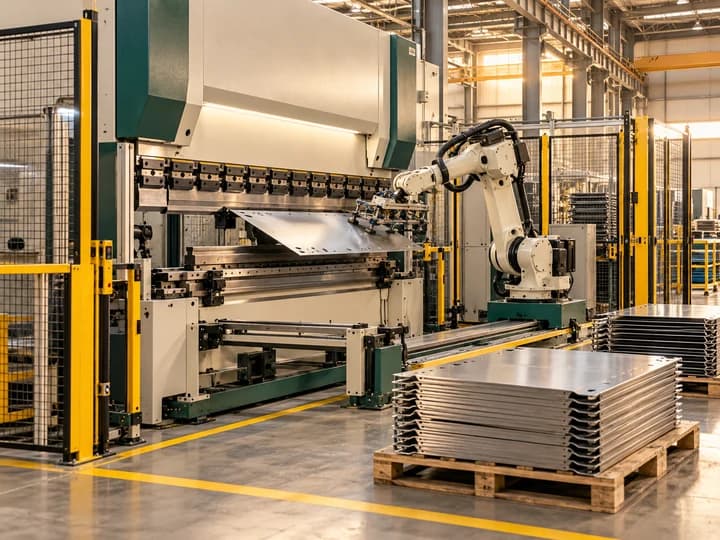
Metal fabrication & components
Build capability in sheet-metal parts, precision machining, industrial skids, tooling and fixtures. Buyers need drawing control, material traceability, repeatable tolerances and reliable delivery.
 Illustrative image
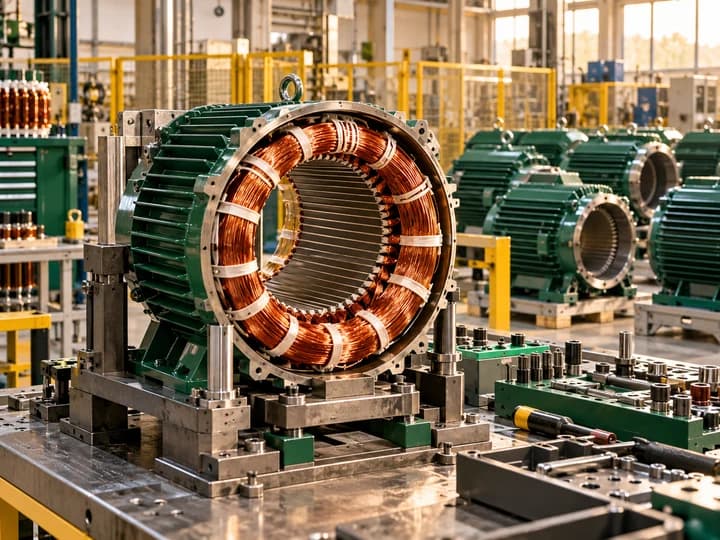
Electrical & electromechanical equipment
Explore motors, control panels, enclosures, switchgear components and industrial assemblies. Define product standards, type tests and utility or EPC qualification early.
 Illustrative image
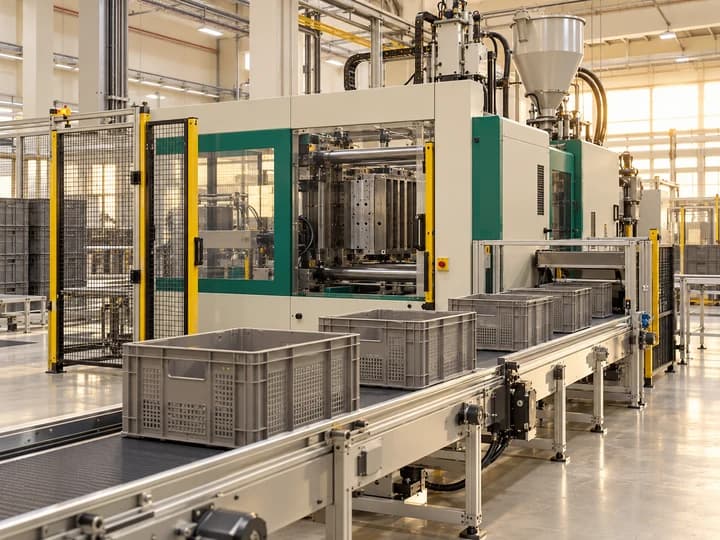
Polymers, packaging & materials
Consider industrial packaging, technical mouldings, reusable transport products and converting services. Resin consistency, mould maintenance, food-contact suitability and recycling design can differentiate a supplier.
 Illustrative image
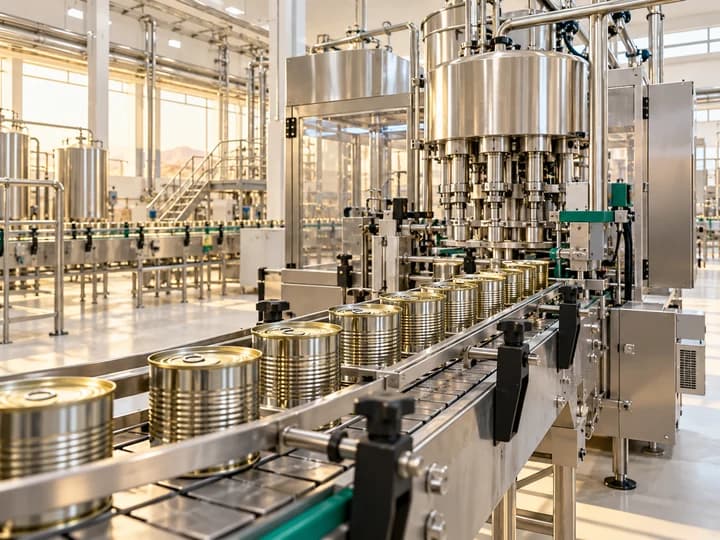
Food manufacturing & process equipment
Serve food processors with hygienic manufacturing, filling and packaging equipment, refrigeration components and line support. Separate food-factory approvals from machinery-supplier obligations.
 Illustrative image
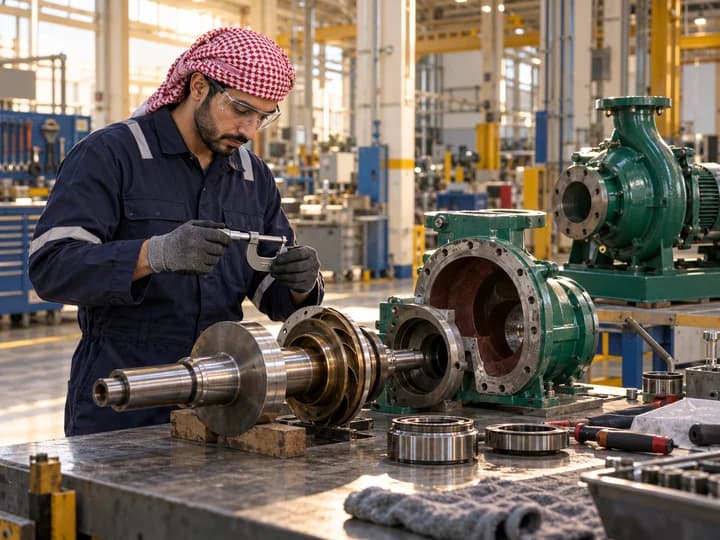
Maintenance, repair & industrial services
Build recurring service contracts around pumps, rotating equipment, condition monitoring, calibration and shutdown support. Define competency, response times, spare-parts access and warranty responsibility.
 Illustrative image
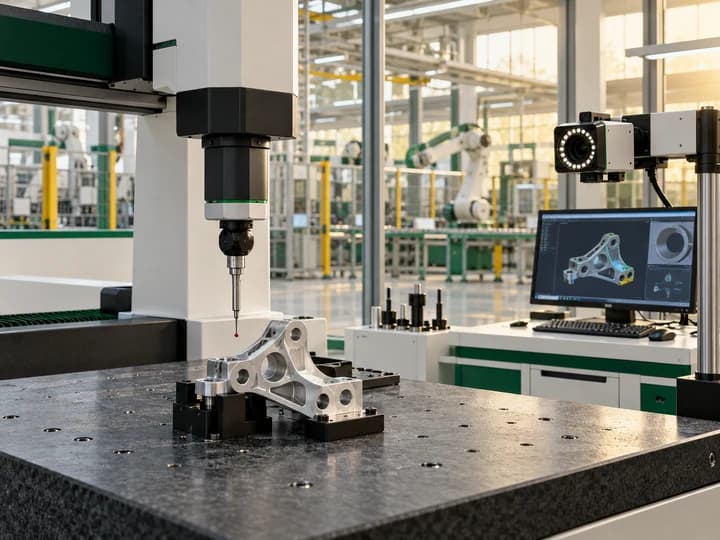
Smart factories, testing & quality
Offer machine vision, metrology, robotics integration, MES and industrial data services. Start with a measurable use case, safe integration and workforce training instead of an uncosted factory-wide overhaul.
Riyadh and surrounding industrial cities
Evaluate central-market access for equipment, electrical assemblies, packaging and general manufacturing; compare established and newer MODON locations.
Source:S08Dammam and the Eastern Province
Consider proximity to energy, process-industry and industrial-service customers; do not infer eligibility for a named park from regional location alone.
Jeddah industrial cities
Evaluate western-market distribution and port access for packaging, food-related production and general manufacturing. Inspect the specific site and utility offer.
Source:S08Jubail and Yanbu
Royal Commission industrial ecosystems suited to project-specific downstream and support-industry proposals, subject to land, feedstock and environmental approvals.
Ras Al-Khair and Jazan
Compare relevant Royal Commission industrial and SEZ options. The special-zone boundary and admission decision determine any zone-specific treatment.
Regional cities and ready-built factories
Include Qassim, Al-Kharj, Al-Ahsa and other MODON locations in the feasibility screen when buyers, labour and inputs justify them. Ready-built does not mean every activity is pre-approved.
- Step 1
Validate the commercial case
Define product codes, buyers, import competition, order volumes, local-content needs and realistic selling prices. Build capex, operating-cost and working-capital scenarios.
- Step 2
- Step 3
Enter the industrial licensing journey
MIM licensing has establishment, construction and production stages. An early-stage licence supports project development; it is not permission to start manufacturing. Confirm which industrial or service activity fits your process.
Source:S13 - Step 4
- Step 5
- Step 6
- Step 7
- Step 8
Maintain compliance after launch
Track licence conditions, reporting and renewal dates, environmental monitoring, workforce obligations, tax and e-invoicing requirements, customer audits and industrial survey submissions where applicable.
Source:S53
Product and shipment conformity
Identify the applicable SASO technical regulation and SABER route. Regulated commercial products may require product and shipment certificates; other products may follow self-declaration. Confirm exclusions and the current product route rather than assuming one certificate fits all.
Quality, testing and traceability
Plan inspection and test records, supplier approval, calibration, batch or serial traceability and nonconformity handling. ISO 9001, ISO 14001 and ISO 45001 may support qualification; do not present them as universal statutory permits.
Special product and service pathways
Food, pharmaceuticals and medical devices require the relevant SFDA pathway. Military industrial activities require GAMI authorisation. Testing, hazardous activities and professional engineering may have additional scope-specific licensing or accreditation.
Customer and local-content qualification
OEM, utility and EPC vendor approvals are commercial gateways, separate from regulatory permits. Check LCGPA mandatory-list registration, industrial-scan submission and product-specific local-content thresholds and effective dates when bidding for public procurement.
People, site safety and digital operations
Budget for occupational safety, competent operators, machine guarding, lifting controls and maintenance isolation. Verify current labour localisation and work-permit requirements for the exact activity. For connected plants, include access control, backups and OT network security in supplier contracts.
Standard Incentives
Qualifying priority industrial projects can receive support of up to 35% of eligible initial investment, capped at SAR50m per project. Check current product scope, application window, localisation commitments and disbursement conditions. The announced SAR10bn is a programme allocation, not a grant to each factory.
SIDF project financing
Finance for establishing or expanding eligible projects is subject to financial, technical and market appraisal, security and agreed drawdown milestones. Initial application acceptance is not final loan approval.
Source:S05Tanafusiya and industrial upgrading
Evaluate financing for digitisation, automation and energy-efficiency improvements. Existing-factory criteria, demonstrable operational benefits and financial records differ by track. Validate supplier capability and project returns.
Source:S06Industrial land and ready-built facilities
MODON and other industrial developers offer site options subject to activity fit and availability. Compare lease terms, fit-out, utility connection and operating costs; a published facility category is not a reserved unit.
Workforce development
Use HRDF and TVTC channels to explore eligible hiring, training and technical programmes. Scheme-specific approval is necessary; do not apply one salary-support rate to every employer or role.
Export development and credit protection
Saudi Exports supports eligible export-development activities. Saudi EXIM offers export finance and insurance for qualifying transactions. Compare coverage, exclusions, buyer credit, repayment terms and your share of costs.
Industrial customs relief
Apply for applicable machinery or input exemptions and confirm approved HS codes, quantities and conditions before importing. Export-related input relief has separate criteria. VAT treatment must be checked independently.
Special economic zones
Compare an eligible SEZ proposal separately from an ordinary industrial-city lease. Benefits depend on admission, licensed activities and current implementing rules; no blanket tax holiday is promised here.
Source:S10
Trade, duties and taxation
Manufacturers need a landed-cost and export-compliance model at product level, including tariffs, conformity, logistics, working capital and tax recovery timing.
Read trade figures correctly
GASTAT reported Q4 2025 non-oil exports including re-exports up 18.6% year on year, while national non-oil exports fell 1.5%. This illustrates why re-exports must be separated from locally produced exports. It is an economy-wide comparison, not a manufacturing sales total.
Source:S23Customs duties and landed cost
Classify every machine, spare part, material and finished product using the current Saudi tariff. Duty is product- and origin-specific: do not assume a universal 5% rate. Check trade remedies, restrictions, valuation, freight, insurance and any approved industrial exemption.
Income tax, Zakat and withholding
The general corporate income-tax framework includes 20% on the relevant non-Saudi ownership share of taxable income; ownership and special rules determine the actual treatment. Zakat, withholding on relevant non-resident payments, treaties and transfer pricing require separate assessment. Do not apply 20% to revenue.
Source:S21FTA access requires qualifying origin
The GCC–Singapore FTA entered into force on 1 September 2013 and the GCC–EFTA FTA on 1 July 2014. Check the agreement schedule, product-specific origin rule, sufficient processing, transport rules and origin evidence. Saudi incorporation or simple re-export alone does not prove preferential origin. Do not label agreements still under negotiation as in force.
Import, export and agent responsibilities
Agree the importer of record, HS classification, Incoterms, customs representation, conformity certificates, invoices, packing list, origin evidence and transport documents. Verify whether a distributor, agent or manufacturer bears recall, warranty and local technical-support obligations.
Resolve classification and origin uncertainty early
For an uncertain tariff, preferential-origin or valuation issue, consider the ZATCA advance-ruling service before committing to a landed-cost model. Regional trading relationships do not by themselves establish a product’s duty-free eligibility; check the applicable agreement and origin documents for the exact trade route.
Saudi manufacturers and international participants
A curated starting directory, not an exhaustive ranking or endorsement. Company examples show different roles: operating manufacturers, industrial investors, service providers and announced projects.
Status labels show what the cited source supports. They are not endorsements or partnership offers.
Showing 12 of 12
alfanar
operating manufacturer
Saudi electrical and industrial manufacturing group; potential reference for electrical assemblies, supplier ecosystems and local production capabilities.
SENAAT (formerly Zamil Industrial)
operating manufacturer
Saudi diversified industrial group with manufacturing and construction-related solutions. Use the current corporate name while retaining the former name for recognition.
Saudi Ceramics
operating manufacturer
Saudi manufacturer of ceramic products, sanitary ware and water heaters; relevant to building-product supply chains and industrial quality.
Obeikan Glass
operating manufacturer
Saudi glass manufacturing example connecting industrial materials, processing, quality and downstream supply.
Almarai
operating manufacturer
Saudi food-production and processing ecosystem; relevant to hygienic equipment, packaging, plant maintenance and food supply chains.
Dussur
industrial investor
Saudi industrial investor with a portfolio approach to localising industrial capabilities. Check current ownership for each portfolio asset.
GE Vernova / GESAT
operating; former JV
Dammam turbine manufacturing and technical capability. Former Dussur JV; GE Vernova announced acquisition of Dussur shares in September 2024.
Siemens Energy
operating manufacturing and services
Saudi manufacturing and industrial services presence including the Dammam hub. Distinguish local production from imported equipment supply for each contract.
Schneider Electric
existing facilities; separate planned expansion
Existing Riyadh and Dammam manufacturing presence and industrial automation expertise. A 2025 release described a further SPARK plant as being prepared, not already operational.
PIF / Hyundai HMMME
groundbreaking announced; production not confirmed here
Automotive manufacturing JV in KAEC with announced 50,000-vehicle annual target and first output targeted Q4 2026 in the May 2025 release. Verify commissioning before claiming production.
PIF / Pirelli
announced JV; current output unverified
Announced tyre-manufacturing JV illustrates localisation and supplier-development opportunities. Historical planned dates do not establish current operating status.
SAMI-AEC / HP / Foxconn: Remal
strategic partnership announced
Computer manufacturing project launched in October 2025 through a strategic partnership. Classify as a partnership announcement, not an assumed equity JV.
Partnerships that develop local capability
Technology transfer needs evidence in the contract and on the factory floor: licensed know-how, Saudi technical training, process qualification, tooling, engineering responsibility and measurable local value added. A supply contract or MoU alone is not proof.
GESAT: track the ownership change
Use GESAT as an operating localisation example with a former-JV label. The September 2024 acquisition announcement explicitly discusses Saudi technical training and knowledge transfer; the older Dussur ownership split must not be presented as current.
Source:S29HMMME: a planned capacity case
The May 2025 groundbreaking demonstrates committed project development and an announced production target. Treat the 50,000 vehicles per year as a target and the Q4 2026 first-output date as an announced schedule until a newer commissioning statement is checked.
Source:S30What to negotiate in a technology partnership
Define IP and process rights, permitted territories, tooling ownership, training hours and competencies, supplier qualification, local engineering scope, quality acceptance, warranty, spare parts and exit provisions. Measure capability delivered rather than relying on an announcement headline.
Authorities, enablers and institutes
Use the relevant authority for the decision required. Industrial cities, financing bodies, regulators and training institutes have different responsibilities.
Government authorities, funds and regulators decide or approve. Programmes and chambers support and connect.
Showing 19 of 19
Ministry of Industry and Mineral Resources
Industrial policy, licensing and industrial investor services.
Ministry of Investment / Invest Saudi
Investment registration, activity conditions and investor support.
MODON
Industrial land, ready-built facilities and city services.
Royal Commission for Jubail and Yanbu
Industrial cities and services within its jurisdictions.
Economic Cities and Special Zones Authority
Economic-city and SEZ investor pathways.
Saudi Industrial Development Fund
Industrial project finance, upgrading programmes and financial appraisal.
SASO / SABER
Product technical regulations and applicable conformity routes.
National Center for Environmental Compliance
Applicable environmental permitting and compliance outside special jurisdictions.
ZATCA
Tax, customs, exemption administration and border compliance.
Local Content and Government Procurement Authority
Mandatory-list and local-content requirements in public procurement.
Saudi Export Development Authority
Exporter development, market access support and eligible export incentives.
Saudi Export-Import Bank
Export finance and export credit insurance.
Human Resources Development Fund
Eligible employment and workforce development support.
Technical and Vocational Training Corporation
Technical colleges and vocational and strategic-partnership training routes.
Advanced Manufacturing and Production Center
Industrial technology adoption, productivity and transformation support; inaugurated in 2025.
Asharqia Chamber and regional chambers
Industrial committees and local business networks; verify membership and relevant committee.
GAMI for regulated military activities
Separate military industrial authorisation where the activity falls within its scope.
Saudi Food and Drug Authority
Relevant establishment, product and manufacturing pathways for food, drugs, medical devices and other regulated categories.
Made in Saudi programme and member network
Membership, national branding and company discovery for eligible businesses. Programme membership does not replace conformity or factory permits.
Jobs, skills and the next generation of industry
Hiring depends on the subsector and level of automation. Plan role-specific training and safe progression from operator to technician and engineer, with clear practical competency assessment.
Separate realised, supported and potential jobs
The page indicators distinguish employment reported at production starts from potential jobs attached to licences. HRDF separately reported supporting 151,000 Saudis into work across industry and mining during 2020–H1 2025. That multi-year, combined-sector support figure is not annual manufacturing job creation.
Production and skilled trades
CNC operators and programmers, industrial electricians, welders, toolmakers, mechatronics technicians and assembly team leaders. Build drawing-reading, measurement, safe operation and defect-recognition skills.
Engineering, quality and reliability
Process and manufacturing engineers, quality inspectors, metrology technicians, maintenance planners and reliability engineers. Train in root-cause analysis, preventive maintenance, statistical control and traceable documentation.
Automation and industrial data
PLC and controls engineers, robotics integrators, MES specialists, machine-vision technicians and OT security practitioners. Link training to a safe practical installation and measurable production outcome.
Supply chains and industrial business
Procurement, planning, export compliance, technical sales, supplier development and local-content analysis. Train teams to price lifecycle cost, qualify suppliers and manage delivery risk.
Where to start training discussions
Match TVTC and strategic-partnership programmes, HRDF support channels, the Advanced Manufacturing and Production Center and OEM technical training to the roles required. Confirm current admission, accreditation, employer obligations and programme availability directly.
- Editorial assessment
Deeper local supplier capability
Tooling, moulds, fixtures, industrial components and repair capacity can reduce dependence on long lead-time imports when local cost, quality and scale are viable.
- Editorial assessment
Practical productivity improvements
Prioritise bottleneck removal, preventive maintenance, scrap reduction and energy metering before complex automation. Use baseline and post-project performance evidence.
- Editorial assessment
Reliable testing and certification capacity
Accessible metrology, materials testing and product qualification help SMEs meet buyer specifications. Verify the accreditation scope and acceptable test method for each contract.
- Editorial assessment
Resource efficiency and circular production
Explore water reuse, efficient motors, heat recovery, industrial waste segregation and repair-led life extension. Validate environmental approvals and technical payback.
- Editorial assessment
SME scale and working capital
Long customer payment cycles and tooling costs can constrain otherwise strong suppliers. Model cash conversion, purchase commitments and phased expansion.
- Editorial assessment
Local engineering ownership
Partnerships should leave local teams able to troubleshoot, modify, qualify and improve processes, with documented rights and training rather than permanent dependence on visiting specialists.
Industry forums, exhibitions and networks
Use events to qualify suppliers, meet buyers and compare technology. This directory identifies established series; reconfirm the next edition and registration with the organiser before publishing travel dates.
Dates change between editions. Confirm the next edition with the organiser before you plan travel.
Industrial Transformation Saudi Arabia
Advanced manufacturing, automation, industrial digitalisation and technology partnerships. Organiser page currently shows a 2027 date alongside mixed-year material; reconfirm before displaying a countdown.
Saudi Smart Manufacturing / Riyadh International Industry Week
Technology and equipment sourcing across industrial production and supporting systems. Avoid recycling dates from the historical government event listing.
Saudi Plastics & Petrochem
Materials, polymers, machinery and process technologies. The organiser advertises 26–29 April 2027 on the reviewed landing page; verify before publication.
Saudi Print & Pack
Packaging, printing, converting and production systems, co-located within the broader industry-week ecosystem.
FABEX Saudi Arabia
Metalworking, fabrication, machinery and related technology sourcing. The 11–14 October 2026 edition is historical on this pack review date.
Saudi Industry Forum
Industrial investment, localisation and policy discussion. The cited 2025 Dammam edition is historical; the next edition is not confirmed in this pack.
Regional chambers and industry committees
Use local chamber industry committees, business councils and bilateral networking channels to seek introductions. Membership is not automatic access to tenders or regulatory approval.
Made in Saudi business community
Explore eligible programme membership, knowledge sharing, networking and the company directory to identify potential manufacturing and supply-chain contacts.
Prepare a credible investment file
Bring a concise evidence-based project file to authorities, lenders, buyers and technology partners.
Demand and sales
Product definitions and HS codes; customer interviews; competing imports and local suppliers; draft offtake or purchase indications clearly labelled non-binding where appropriate.
Technology and operations
Process flow; equipment list and quotations; plant layout; capacity assumptions; yield; utilities; maintenance; supplier and IP agreements; qualification plan.
Funding and resilience
Capex and contingencies; working capital; debt and equity; ramp-up losses; sensitivity to input prices, energy, utilisation, exchange rates and late customer payments.
People and localisation
Organisation, role-specific headcount, competency gaps, training partners, safe work procedures and a documented local-content development plan.
Approvals and delivery plan
Ownership and entity documents; activity and licence map; site and utilities; environment and safety; product certificates; schedule, decision owners and current-source links.
Common questions
Use these answers as an entry guide, then follow the linked authority for the exact activity.
Can a foreign investor establish a manufacturing business?
Does the initial industrial licence allow production?
No. The industrial journey distinguishes establishment, construction and production. Complete the production-stage requirements and other applicable approvals before commercial manufacturing.
Is the 35% incentive automatic?
No. It is a maximum for qualifying projects, capped at SAR50m and subject to the programme scope, application and approval. Confirm the current intake.
Does ISO certification replace product approval?
Does an industrial service company need the same approvals as a factory?
Does this directory confirm a company will accept a JV?
No. It identifies relevant participants and documented examples. Commercial interest, partner availability and technology rights require direct due diligence.
Turn an industrial idea into a qualified project
Define your product, location, partner requirements and investment stage, then use the official channels above to progress your next decision.
Sources and reference periods
Official government, organiser and company sources checked on 22 October 2026. Titles are shown as published.
- S01SPA / MIM: 2025 industrial and mining performance (opens in a new tab) · Checked 2026-10-22
- S02MIM: Factories of the Future (opens in a new tab) · Checked 2026-10-22
- S03SPA: Standard Incentives programme (opens in a new tab) · Checked 2026-10-22
- S04Standard Incentives service (opens in a new tab) · Checked 2026-10-22
- S05SIDF: project financing (opens in a new tab) · Checked 2026-10-22
- S06SIDF: Tanafusiya (opens in a new tab) · Checked 2026-10-22
- S07MODON: medium ready-built factories (opens in a new tab) · Checked 2026-10-22
- S08Industrial site allocation (opens in a new tab) · Checked 2026-10-22
- S09Royal Commission for Jubail and Yanbu (opens in a new tab) · Checked 2026-10-22
- S10ECZA: investor journey (opens in a new tab) · Checked 2026-10-22
- S11MISA: updated Investment Law (opens in a new tab) · Checked 2026-10-22
- S12MISA: registration service (opens in a new tab) · Checked 2026-10-22
- S13SPA: three-stage industrial licence (opens in a new tab) · Checked 2026-10-22
- S14Daleel: downstream investor journey (opens in a new tab) · Checked 2026-10-22
- S15NCEC: construction environmental permit, category 3 (opens in a new tab) · Checked 2026-10-22
- S16RCJY: construction environmental permit (opens in a new tab) · Checked 2026-10-22
- S17SASO: product conformity certificate (opens in a new tab) · Checked 2026-10-22
- S18SASO: imported shipment certificate (opens in a new tab) · Checked 2026-10-22
- S19Saber: conformity platform (opens in a new tab) · Checked 2026-10-22
- S20ZATCA: VAT implementing regulation amendments (opens in a new tab) · Checked 2026-10-22
- S21MISA: tax laws overview (opens in a new tab) · Checked 2026-10-22
- S22ZATCA: industrial exemption inquiry (opens in a new tab) · Checked 2026-10-22
- S23GASTAT: December / Q4 2025 trade release (opens in a new tab) · Checked 2026-10-22
- S24EFTA: GCC free-trade agreement (opens in a new tab) · Checked 2026-10-22
- S25Enterprise Singapore: GCC–Singapore FTA (opens in a new tab) · Checked 2026-10-22
- S26HRDF: industry and mining employment support (opens in a new tab) · Checked 2026-10-22
- S27TVTC: technical and vocational training (opens in a new tab) · Checked 2026-10-22
- S28SPA: Advanced Manufacturing and Production Center inauguration (opens in a new tab) · Checked 2026-10-22
- S29GE Vernova: acquisition of Dussur stake in GESAT (opens in a new tab) · Checked 2026-10-22
- S30PIF: Hyundai JV groundbreaking (opens in a new tab) · Checked 2026-10-22
- S31PIF: Pirelli JV announcement (opens in a new tab) · Checked 2026-10-22
- S32Schneider Electric: Saudi manufacturing facilities (opens in a new tab) · Checked 2026-10-22
- S33Siemens Energy: Saudi operations (opens in a new tab) · Checked 2026-10-22
- S34alfanar: business units (opens in a new tab) · Checked 2026-10-22
- S35SENAAT: company profile (opens in a new tab) · Checked 2026-10-22
- S36Obeikan Glass (opens in a new tab) · Checked 2026-10-22
- S37Saudi Ceramics (opens in a new tab) · Checked 2026-10-22
- S38Almarai: manufacturing and value chain (opens in a new tab) · Checked 2026-10-22
- S39Dussur: industrial portfolio (opens in a new tab) · Checked 2026-10-22
- S40SPA: Remal / HP / Foxconn partnership (opens in a new tab) · Checked 2026-10-22
- S41Industrial Transformation Saudi Arabia organiser (opens in a new tab) · Checked 2026-10-22
- S42Saudi Smart Manufacturing: government event listing (opens in a new tab) · Checked 2026-10-22
- S43Saudi Plastics & Petrochem organiser (opens in a new tab) · Checked 2026-10-22
- S44Saudi Print & Pack organiser (opens in a new tab) · Checked 2026-10-22
- S45FABEX Saudi Arabia organiser (opens in a new tab) · Checked 2026-10-22
- S46SPA: Saudi Industry Forum / incentives launch (opens in a new tab) · Checked 2026-10-22
- S47Asharqia Chamber: committees (opens in a new tab) · Checked 2026-10-22
- S48Saudi Exports: export incentives (opens in a new tab) · Checked 2026-10-22
- S49Saudi EXIM: export credit insurance (opens in a new tab) · Checked 2026-10-22
- S50Saudi EXIM: export financing (opens in a new tab) · Checked 2026-10-22
- S51LCGPA: manufacturer / service provider registration (opens in a new tab) · Checked 2026-10-22
- S52SPA: local-content thresholds (opens in a new tab) · Checked 2026-10-22
- S53SPA: periodic industrial scan (opens in a new tab) · Checked 2026-10-22
- S54GAMI: establishment permit purpose (opens in a new tab) · Checked 2026-10-22
- S55MIM: export-related customs exemption service (opens in a new tab) · Checked 2026-10-22
- S56SPA: updated industrial enablers and incentives guide (opens in a new tab) · Checked 2026-10-22
- S57SFDA: current electronic services (opens in a new tab) · Checked 2026-10-22
- S58ZATCA: customs advance rulings (opens in a new tab) · Checked 2026-10-22
- S59Made in Saudi: membership and programme (opens in a new tab) · Checked 2026-10-22
- S60Made in Saudi: members directory (opens in a new tab) · Checked 2026-10-22
Images on this page: Conceptual AI-generated image; not a named facility.